



01 May Sandy Storyline wins the Tribeca Storyscapes Competition!
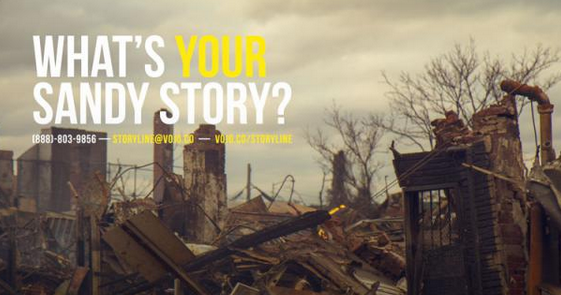
Congratulations to the collaborative documentary Sandy Storyline, which was just awarded the top prize for transmedia storytelling at the Tribeca Film Festival’s Storyscapes exhibition. Chronicling New York’s response to Hurricane Sandy, the online documentary is a collaboration between Cowbird, Housing is a Human Right, and our neighbors at the MIT Center for Civic Media. Interoccupy.net and Occupied Stories also partnered on the project–making Sandy Storyline collaborative even in its conception.
The idea behind the project was deceptively simple: Sandy Storyline was a place where New Yorkers could tell their own stories about the hurricane and the recovery. The project team wanted to share “these stories online in a way that prioritizes first person storytelling and creates the space for deeper storytelling than is possible through social media,” wrote Becky Hurwitz of MIT’s Center for Civic Media, one of the key organizers on the project. To do so, the team tapped Cowbird– an online storytelling platform that lets people make their own multimedia stories using photographs, text, and audio.
Working out of the tradition of oral history, Sandy Storyline organizers held workshops in the immediate aftermath of Hurricane Sandy where people affected by the storm could record their stories. The team also used the MIT Center for Civic Media’s VoJo call platform to record stories; with VoJo, anyone call dial a number to record their remembrances. The stories are then transferred to the website, where they are made available to the public. In addition to traditional uploads, stories can also be submitted to Sandy Storyline through SMS, making it possible for people to contribute to the project without having access to a computer.
Becky Hurwitz explained the genesis of Sandy Storyline in a case study first posted on the MIT Center for Civic Media blog:
We quickly realized the potential of inviting people who were being underserved all across the city and who may not have internet access to tell their own stories. We also realized that the project needed to be more expansive than just housing and named the project with the intention to serve as both a phone line to call in stories and also a platform to tell a different kind of storyline about Hurricane Sandy. We set up a group for StoryLine and Rachel developed and recorded custom prompts to invite people to share stories about their experiences of Sandy.
Since the storm, more than 300 stories have been submitted to Sandy Storyline. That number is still growing, facilitated in large part by workshops and continuing outreach in areas affected by the storm. Ingrid Kopp of the Tribeca Film Institute describes Sandy Storyline as “a living archive that shows the potential for sharing stories on a very human scale.” In this way, Sandy Storyline is a fantastic example of the potential of participatory documentaries to connect people with the communities around them and humanize the stories behind the headlines.
If you’re interested in learning more about the roots of the project, I can’t recommend Becky’s blog post more highly. You can also explore the hundreds of stories on Sandy Storyline, or share your own story about the storm.